Showing posts with label Vegetarian Dishes. Show all posts

Monday, July 16, 2012

Luxury Thai Veggie Stir fry


Here is the standard conversation I have when I tell people I have a food blog and/or that I host supper clubs:

Me: “I have an Asian fusion food blog called Mango Ginger. And I host supper clubs where I cook the recipes”
Random person: “Really? How interesting. Why?”
Me: “Why what?”
RP: “Why do you do it? Do you make money from it?”
Me: “No, not really.”
RP: “Do you want to open a restaurant?”
Me: “No. I already have a job. I just like food. And I like other people who like food.”
RP: “Oh. How interesting [or other such baffled or dismissive remark].”
Me: Sighhhh [with the air of a misunderstood artist]

But it makes perfect sense to me. And it makes perfect sense to my new friend Ramya. I met her online (as all the kids are doing these days), sharing recipes on a food bloggers’ forum call Food Buzz – she has an awesome blog called Mistress of Spices, check it out. It turns out that in addition to our shared food obsession and similar day jobs, we both live in Bangkok. So we have also met up in real life and Ramya was a guest and reviewer at my last supper club. And that, my friends, is why I blog – because it’s a passport into a world of passionate an interesting foodies.

Anyway, Ramya is a veggie and I realised when I was making her tofu dish for the supper club that I have neglected my inner vegetarian of late. It’s a common misconception that Thai food is veggie friendly – most dishes contain meat or at least fish sauce or dried shimps. But the good news is that it’s not hard to make a few tweaks and substitutions to come up with a meat-free delight. As a former veggie, being served this would have made me leap up and hug the person who had cooked it.


Time: 30 mins
Rating: Easy. Luxury doesn’t have to be hard work.
Serves: 2

Ingredients:

100g shitake mushrooms
100g oyster mushrooms
1 carrot
100g sugar snap peas
150g tofu (either firm or deep fried)
40g macademia nuts
1 clove garlic
1 small red chilli
½ red onion
1 tbsp tamarind paste (if you can't find it, mix lime juice with a little ketchup)
1 tbsp soy sauce
1 tsp brown sugar

Method

  1. Finely slice the red onion and garlic. Finely chop the chilli.
  2. Then prepare the vegetables: cut both kinds of mushroom into large chunks. Trim the sugar snap peas. Cut the carrot into thin slices.
  3. Cut the tofu into large chunks.
  4. Heat a little oil in a wok over a high flame. Add the onion, garlic and chilli. Fry for about 30 seconds stirring constantly. Add the tamarind paste, soy sauce and sugar and stir well. Next add the tofu and stir till coated. Continue frying for about a minute.
  5. Add the remaining vegetables. Continue to cook stirring constantly for about 5-7 minutes until the vegetables have softened a little but not soggy. Add the nuts and cook for another minute.
  6. Remove from the wok and serve with steamed rice.

Saturday, May 26, 2012

Cool Cucumber Asian Gazpacho Shots


At the coolest party I ever went to (London, opening of some new club, many stories up, full of bright young things, depressingly long ago), we were greeted by a smiling Eastern European model with a tray of pear flavoured vodka shots. What a way to welcome your guests, I thought. It set the tone for the night – decadence, incredible hospitality, and the makings for the mother of all hangovers.

Having crossed the Rubicon of thirty, I find myself at fewer such glamorous occasions, and when I do, wondering whether I should really be there. But I refuse to get depressed about getting older. Partly because it is one of the few things in life which is entirely out of my hands so complaining is futile. And partly because there are advantages to not being in your twenties anymore: I have a much cooler home than I did back then. I am much better cook. And I have a really nice husband who does my washing up for me, rather than some punk who never calls.

When I launched my supper club (in said cool home, with good cooking and nice husband washing up afterwards), I wanted to keep the sentiment of those pear vodka shots, even if in a more sedate form. Offering people a welcoming treat is, in my opinion, critical to kick-start a good dinner party or supper club.

This is my Asian version of a gazpacho, a Spanish vegetable soup which is served cold. I served these in small Thai tea cups, but you could use ordinary shot glasses. They are garnished with a tiny tasty, pretty, fruity skewer. It’s the perfect way to welcome your guests on a hot summer’s evening (or a steamy Bangkok hot season evening) and introduces the palate to some of the Asian flavours to follow. 

Time: 20 mins (plus a few hours’ pickling time for the ginger)
Rating: Easy, just whiz it up in a blender
Serves: Makes 10 shots

Ingredients

1 inch knob ginger
1 tbsp rice vinegar
1.5 tsp sugar
1.5 tsp salt
½ large cucumber
½ apple
1 clove garlic
1 kaffir lime leaf
1 small red chilli
1 stick lemongrass
Juice 1 lime
Small bunch/10g mint
Small bunch/10g coriander
Small bunch/10g Thai basil
200ml coconut milk
4 tbsp apple juice
1 tbsp sesame oil
50ml water

To garnish:
½ cucumber
Chunks of melon
Thai basil leaves
Cocktail sticks

Method:

  1. First make some pickled ginger. Try to do this the night before, or at least several hours in advance. Combine the salt, sugar and vinegar in a jar. Add a little water if necessary until the salt and sugar dissolve. Slice the ginger as thinly as possible with a sharp knife. Add it to the vinegar mixture, close the jar tightly and leave in the fridge to pickle.
  2. When the ginger has pickled, prepare the other ingredients. Peel and chop the cucumber and apple. Very finely chop the kaffir lime leaf, lemongrass, garlic, chilli. Coarsely chop the mint, coriander and Thai basil. Put them all in a blender with half of the pickled ginger and add the coconut milk, lime juice, apple juice, sesame oil and water. Blend until smooth, add a little more water if needed.
  3. Pass through a coarse sieve and chill in the fridge.
  4. While the gazpacho is chilling, make the garnish. Peel and deseed the remaining cucumber. Chop the cucumber and melon into evenly-sized cubes. Thread one piece of cucumber onto a cocktail stick. Next take a piece of pickled ginger, roll it up finely and thread it on. Then thread on a piece of melon, followed by a Thai basil leaf and finally another piece of cucumber.
  5. Serve the gazpacho in small cups or shot glasses with the garnish skewer placed on the top.

Sunday, May 20, 2012

Mina’s Coconut Aubergine Salad with Thai Herbs


This is the second dish which Mina taught me on my heavenly island cooking course on Koh Yao Noi. Mina is a local lady who runs the island’s only cooking school. Her food is elegant, healthy, home-made and downright gorgeous.

Mina's selection of herbs and veggies for the cooking class

This dish was so tasty that I showcased it at my first supper club and it went down a treat.

I always get so excited when I unearth a new ingredient. This dish gave me a chance to use wing beans, my new discovery. They’re an eccentric relative of the green bean – tasty, crunchy and make an X-shape when you slice them.

My new friends - wing beans!

This dish encapsulates what I love about Thai cooking – strong, delicious, clean flavours and healthy nutritious food.  As the lovely Mina cooked this for me, she explained that herbs in Thailand are as much about their medicinal properties as they are about flavour. Galangal, lemongrass and coriander all believed to be good for the heart and the digestive system. So you’re actually doing your body a favour by eating this. Don’t mind if I do!

Ingredients

1 aubergine
Small handful green beans (or wing beans)
4 small shallots or ½ small red onion
1 Thai aubergine (if you can find it)
6 tbsp desiccated/grated dried coconut
2 sticks lemongrass
2 small red chillies
3 slices ginger or galangal
Small bunch coriander
2 shallots or ¼ red onion to garnish (deep fried)

For the dressing:
Juice 1 lime
1 tbsp light soy sauce
1 tsp brown sugar

Method

  1. Preheat the oven to 180°C. Pierce the aubergine several times with a fork. Place on a baking sheet and roast in the oven for about 30mins or until soft all the way through. Allow to cool and dice into chunks about 1 inch in thickness.
  2. Spread the coconut out on a baking tray and roast in the oven for about 2 mins until lightly toasted. Keep an eye on it as it can burn easily.
  3. Very finely slice the garnish shallot/red onion. Heat a few tbsp oil in a small pan. When it is very hot add the shallot/onion and deep fry til golden brown and crispy. Remove and place on a piece of kitchen roll to soak up excess oil. Allow to cool and set aside.
  4. Next prepare the other salad ingredients. Remove the coarse outer layer of the lemongrass. Very finely slice the lemongrass sticks horizontally. Finely chop/mince the ginger, chilli and shallots. Leave the seeds in the chilli and chop them up too if you want it hot, remove otherwise. Finely slice the beans width-ways about 5mm thick. Coarsely chop the coriander. Finely slice the Thai aubergine if you are using it.
  5. Combine all the salad ingredients in a large bowl.
  6. Mix together the dressing ingredients and pour over the salad. Toss well and serve with the fried shallot as a garnish.

Wednesday, April 11, 2012

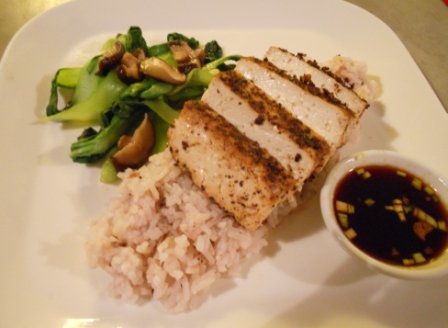
Blackened Chinese Spiced Tofu with Ginger Dipping Sauce


There are milestones in every cook’s life when they make something for the first time and think, “I can never go back”. This is my third such moment. The first came when I first visited Bangkok four years ago and learned to make my own curry paste. The second was a year ago when I bought my first home-made ice-cream machine. And the third was last week when I made my own spice rub for this tofu dish.

I am not a chef; I’m a girl who loves learning to cook new things. To some a spice-rub is probably fairly basic, but to me it was a new step on my culinary journey. During my spice-rub epiphany I realised how wonderful it is to season food with a combination of flavours and a texture that works for your dish. I can’t believe that I have gone through life never questioning Chinese five spices or garam masala. Having finally figured out the delicate combination of beautiful spices that go into those mixes…well, I feel like I just cracked the Da Vinci Code or something.

Anyway, I suggest doubling or trebling the quantities for the spice rub and keeping the rest in an airtight container for future use. I have already used it since on chicken breasts and pork belly.

This dish follows my golden rule for vegetarian cooking: treat the main element as you would meat – so in this case, marinate, spice rub and fry. My veggie guests all gave it a big thumbs up.


Time: 1 hour
Rating: A little effort - the spice rub takes a bit of work if you are grinding by hand, and there are a few different stages and processes to this dish
Serves: 2

Ingredients

1 block firm tofu

For the Marinade:
2 tbsp light soy sauce
1 tbsp sesame oil

Spice Rub:
1 tsp black pepper corns
2 star anise
1 tsp Szechuan pepper corns
1 inch cinnamon stick
1 tsp dried ginger
½ tsp salt
½ tsp sugar

Dipping Sauce:
120ml light soy sauce
60ml cup red wine vinegar
2 tsp minced ginger
3 tbsp brown sugar
2 spring onions

Serve with steamed wild rice, stir-fried pak choi and sliced shitake mushrooms

Method

  1. First marinate the tofu. Remove it from its package and blot dry using kitchen roll. Cut in half into smaller blocks and place in a small shallow dish.
  2. If you are making steamed rice, put this on now and keep it warm until all the other components are ready.
  3. Combine the soy sauce and sesame oil and pour over the tofu. Leave to marinate in the fridge for half an hour, turning over at least once.
  4. Next prepare your dipping sauce.  Very finely mince the ginger and combine with the soy sauce and red wine vinegar. In a small saucepan melt the brown sugar on high heat, until it is just melted but not burnt. Add the soy sauce, ginger and red wine and reduce to a medium heat. The sugar will harden but don’t worry. Bring the mixture to the boil until the sugar is melted again. Remove from the heat and allow to cool. Once cooled, finely chop the spring onions and add to the sauce before transferring to a small serving bowl.
  5. Next prepare your spice rub. Using either a coffee grinder, spice grinder or mortar and pestle, grind the first four spice rub ingredients one at a time. Don’t grind them so much that they become a fine powder as you want to keep some of the texture, but try not to leave any very large chunks in there. Add the remaining spice rub ingredients, combine and spread the mixture out on a plate.
  6. Remove the tofu from the marinade and blot dry onto some kitchen roll, pressing down firmly to help the moisture escape. The drier you can get the tofu, the tastier and firmer it will be so repeat this several times until the kitchen roll stays dry.
  7. Once dry, place the tofu onto the spice rub and press down. Turn each block over and repeat several times until there is a nice thick crust.
  8. Heat a little vegetable oil in small frying pan until it is very hot. Place the tofu squares in the pan and cook for about 2-3 minutes on each side and then another minute on each side. You want it to take on a nice char-grilled look but not burnt to a crisp! Be very careful when you turn them over to avoid scraping off the rub. Use tongs if you have them.
  9. If you are serving pak choi and sliced shitake mushrooms, put these on immediately after the tofu goes into the pan. Cook in a hot wok with a little bit of vegetable oil and a dash of soy sauce, stirring constantly.
  10. Remove the tofu from the pan and cut each block into evenly sized strips. Serve with the rice, greens and dipping sauce.

Tuesday, April 3, 2012

Burmese Baba Ganoush


Yes, I know we’re meant to call it Myanmar these days but I like the alliteration too much, so Burmese baba ganoush it is. But I promise to be more PC and call it Myanmar elsewhere.

And what a time to be celebrating Myanmar! This is a country on the cusp of enormous political and social change. This week’s by- elections saw the opposition party claim a landslide victory. Not long ago their leader Aung San Suu Kyi was under house arrest. This week she is promising “peace and prosperity” for her country. A country which has remained closed off to the world for so long is about to open its doors - we are watching history being made!

I was lucky enough to visit Myanmar for work for the first time last week. Yangon, the capital, is  more green and laid back than I thought any Asian city had it in them to be. A highlight for me was the Shwedagon Pagoda, a Buddhist temple that manages at once to be magestic and serene:

Families, monks and couples strolling around the pagoda

I was one of few foreigners, and people came to chat to me out of curiosity and hospitality. It gives Bangkok’s temples a run for their money, not least because it is still a place for Myanmar people to meet and prey, rather than a tourist attraction:

Lighting candles in prayer

I managed to do some of my work while sampling the national food. Myanmar is bordered by Bangladesh, Thailand, China and India and there are flavours of each country all over, not least in the cuisine. I ate dhal which took me back to India, stewed pork which reminded me of Bangkok’s china town, and delicious stir-fried leafy greens like those which I find in Bangkok. Maybe soon the cafes will be blasting out pop music to Scandanavian backpackers eating banana pancakes. But for now, the food is local and good. I ate in small restaurants where you pick lots of tiny dishes and eat them with rice, vegetable broth and pickles.

Small dishes laid out for lunch in a local cafe

My favourite tiny dish was the smoky eggplant "salad". Why the inverted commas, you ask? Well it’s called a salad in Myanmar but by my standards this is not a salad. Call me old fashioned but to me there are two essential qualities for a dish to be classes a salad: green and crunch. The crunch in this dish is cursory and comes from nuts rather than vegetables. And the green is just a sprinkling from the coriander. Delicious it is, a salad it is not. So I’m calling it a dip. That way everyone knows where they stand. As a dip, I suggest that it is best served with flatbread. And in fact, why not serve it with the Bangladeshi flatbread and hummus to create an Asian Fusion Mezze?


Time: 40 mins
Rating: Easy
Serves: 4-6 as a starter or snack

Ingredients

2 medium aubergines (or eggplants if you’re American)
2 small shallots
2 garlic cloves
1 ½  tbsp vegetable oil
 1 tsp sesame oil
1 tsp sesame seeds
2 tsp peanuts (roasted, salted)
Small handful of fresh coriander leaves
Juice of half a lime
1 tsp soy sauce if you're a vegetarian, fish sauce if you're not

Flat bread or vegetable crudités to serve

Method

  1. Start by cooking your aubergines. Prick the aubergines all over with a fork or skewer (this will stop the skin bursting later) and place on a baking sheet under a hot grill. Allow the skin to char and turn them over to cook the other side. Cook them for about 30 mins in total, rotating them regularly until they are blackened all around and soft all the way through. Remove from the grill and allow to cool.
  2. While the aubergines are cooking, prepare your other ingredients. Cut the shallots in half lengthways and then very thinly slice them, width-ways. Finely chop the peanuts. Lightly toast the sesame seeds in a pan – over a medium heat with no oil, stirring frequently. Finely chop the coriander.
  3. Prepare your garlic. Slice the garlic cloves width-ways as thinly as possible. Combine the two oils and heat in a small frying pan. When the oil is hot add the garlic slices and fry them, stirring constantly to make sure both sides cook evenly. As soon as they turn golden brown remove them from the heat and take them out of the oil. If you burn them at all they will taste bitter. Keep the oil aside, you’ll need it later.
  4. When the aubergines have cooled slice them in half lengthways with a knife and open them up. Remove the main clusters of seeds (but don’t worry about removing all the seeds) and scoop out the flesh into a bowl with a tablespoon.
  5. Mash the flesh (it’s up to you how smooth or chunky you want it), adding a tablespoon of the garlic oil. Stir in the fish sauce, lime juice, shallots, sesame seeds, peanuts, chopped coriander and half of the fried garlic. Transfer to your serving dish and sprinkle over the remaining garlic.

Saturday, March 31, 2012

The Ultimate Veggie Burger – Thai Style


A couple of weeks ago an Irish friend was in town on St Patrick’s day. Somehow this event has passed me by until now and I’ve never understood its significance beyond drinking a lot. And I still don’t because by the time I got round to asking him to explain it to me, I’d already drunk too much and now can’t remember. Something about snakes and a bloke who it turns out was actually English.

I don’t normally hang out in the farang (foreign) pubs and bars in Bangkok – I’m far too much of a snob for that, I'm all about the trendy rooftop bars. But I was warmed by my friend’s patriotism and nostalgia, and so was more than happy to get into the spirit of things, don a green t-shirt and tour the Irish pubs, which that night were bursting at the seams.

Experience has taught me that endurance on a big night out relies on a good feed beforehand so I took responsibility for feeding our party. Among us was a vegetarian.  I have made my feelings on vegetarianism clear in other blog posts: I am an ex-veggie, slightly ashamed that I abandoned the cause (though not that ashamed when faced with pork belly) and determined that no vegetarian should ever feel like a second class diner in my home. So I decided that we would fuel up with a vegetarian meal, as hearty and Guinness-absorbing as any meat feast.

Friends tucking into the burgers around my table
I have had mixed experiences with making veggie burgers in the past because it’s difficult to make them firm enough but still tasty. But I’m pretty sure I’ve cracked it with this recipe. This burger is, if I do say so myself, quite simply epic. It’s scrumptious, firm, filling, easy to make and really nutritious too. And put to the ultimate test, it saw us through a full night of Paddy’s Day fun, see:

Taken in Irish pub #4 of the night: O'Reilly's in Sala Daeng

I served the burger with the same accompaniments and garnishes as I did the Thai burger, only I didn’t have sweet potatoes so I used normal ones instead (fitting, given the Irish theme).

Time: 45 minutes
Rating: Easy, just a bit of chopping.
Serves: Makes 6 - They will keep very well in the freeze if you don’t need the whole batch at once

Ingredients

225g firm tofu, finely chopped
1 aubergine (about 250g)
100g shitake mushrooms
1 carrot
60g Breadcrumbs (you can make this from about 1-2 slices wholemeal bread)
80g cashew nuts
1 egg
1 small onion
2 garlic cloves,
1 stick lemongrass
1 inch knob ginger
2 small red chillis
1 bunch coriander
2 kaffir lime leaves
2 tbsp dark soy sauce
2tbs flour
salt and freshly ground black pepper
vegetable oil for cooking

Garnish:
Sweet chilli sauce
Garlic and lime mayo
Slices of cucumber (pickled if you like), onion, tomato

Method

  1. Start by very finely chopping the mushrooms and aubergine, so they’re about ½ centimetre cubed. Fry them in a wok or pan with a little vegetable and 1 tablespoon of the soy sauce until they are soft all the way through. Don’t be tempted to add any more liquid, you need them to be dry so they don’t make the burgers soggy. When they are done, set them aside to cool.
  2. Prepare all of your other ingredients: Finely pound the cashews in a food processor or mortar and pestle – you should have a fine powder with a few lumps for texture. Chop the tofu into small pieces about the same size as the aubergines and mushrooms. Finely grate the carrot. Finely chop the onion, garlic, chilli, coriander, ginger, lemongrass and kaffir lime leaves. Take time to do this properly – large chunks won’t be pleasant. The lemongrass and lime leaves are particularly tough and you should chop these as finely as you can. For the chillies, leave the seeds in (finely chopped) if you want them spicy, remove if not.
  3. Combine all of the burger ingredients into a large bowl and combine with your hands. Then divide the mixture into six and form into large patties. It should be a nice firm mixture but if not add a few more breadcrumbs and a bit more flour
  4. Heat a frying pan or griddle pan with a little oil over a medium heat and gently place the burgers in the pan. After 3-4 minutes turn over and cook for 3-4 minutes on both sides. Turn over again and cook for another 2 minutes on each side.
  5. Serve in the buns with the sauces and other garnishes.

Cooking ahead? You can make these a day in advance and keep them in the fridge, or well ahead and freeze, defrosting several hours before cooking.

Wednesday, March 14, 2012

Marinated Aubergine Thai-Style Salad


Last week Thailand kindly gave us all a day off work for a Buddhist festival. I spent the day on a culinary exploration of Bangkok. I started with an early lunch in a part of town near the river called Bang Rak which is becoming renowned for its street food. I followed a CNN street food guide and ate my way around the different recommendations. By a little after midday I’d put away a plate of ‘volcanic mussels’ (mussels fried in a gloopy pancake with chilli sauce), roasted duck and rice, some mango with sticky rice, and washed down with a coconut and a bottle of freshly-squeezed orange juice.

I decided to walk off my morning gluttony with a walk around the enormous fresh market at Nothaburi, a river taxi ride away. It’s a beautiful fresh market and a foodie’s paradise. But I’ll be honest, some of it really tested the parameters of my culinary open-mindedness. The meat stalls included every last part of the pig – entrails, ears, trotters. At the fish stall there were huge catfish flapping about in protest and eels squirming in buckets. At the random creatures stall there were terrapins trying to escape from tubs, and the least appetising of all were the frogs, some still alive and hopping about in a bag, others laid out flat on their backs with their innards on display. I toyed with posting some pictures but decided it would be in poor taste on a vegetarian recipe page.

The day left me craving ingredients which had never swum, walked, or hopped, so a vegan dinner it was.As a former veggie I have learned that the trick to making carnivores enjoy vegetarian food is to treat part of the dish as you would a protein – make it hearty, tasty and chunky. In this case, the aubergine is marinated in the same way I marinated the chicken in my marinated chicken recipe. The other salad ingredients are packed with texture and colour and the dressing is has a powerful flavour. Even my extremely carnivorous husband asked for more and didn’t, as I’d feared, head out afterwards in search of fried chicken.

Time: 1hr (including marinating and cooking time)
Rating: Super easy
Serves: 2 people as a main, 4 as a starter

Ingredients

For the marinated aubergines:
1 medium Aubergine (mine weighed 270g)
2tbsp soy sauce
1tbsp clear honey
1 tsp balsamic

For the salad:
1 avocado
1/3 of a cucumber (about 150g)
Handful of rocket leaves
100g cherry tomatoes
100g sugar snap peas
40g cashew nuts
Small bunch mint leaves
Small bunch coriander leaves
Small handful bean sprouts

For the dressing:
Juice 1 lime
2 small red chillis (a spicy variety like birdseye)
2 tbsp olive oil
1 tbsp rice vinegar (or white wine vinegar if you don’t have it)
1 clove garlic
2 tbsp sugar
2cm knob ginger
1 stick of lemongrass

Method

  1. Mix together all the marinade ingredients
  2. Cut the aubergine into medium-sized chunks and cover with the marinade
  3. Refrigerate for 20mins at least, mixing half way through.
  4. Preheat the oven to 180°C
  5. Place the aubergines in a baking dish and cook in the oven for 30 minutes, or until the aubergine chunks are soft all the way through but not burnt.
  6. Next prepare the dressing. Very finely chop the chillis (including seeds), lemongrass, garlic and ginger – take time to do this thoroughly as large pieces in the dressing will be unpleasant. Put the chopped ingredients in a jar and add the remaining salad dressing ingredients. Shake well and set aside.
  7. Then prepare the other salad ingredients. Put the cashews on a baking tray and place in the oven for five minutes until brown, shaking half way through. Take out, allow to cool and chop or break the nuts in half.
  8. Trim the sugar snap peas and blanch them in boiling water for about a minute to soften slightly. Drain and run under a cold tap. Slice them in half widthways diagonally and put in a salad bowl.
  9. Peel and deseed the cucumber and cut into small chunks. Cut the cherry tomatoes in half and cut the avocado into small chunks. Add all of these to the sugar snap peas.
  10. When the aubergines are cooked, remove from the oven and transfer to a plate to cool for about ten minutes.
  11. Coarsely tear the mint and coriander leaves and add them along with the remaining salad ingredients.
  12. Add the cooled aubergines, pour over the dressing and serve.

Thursday, March 8, 2012

Baked Pea and Potato Samosas


The first time I went to India was fourteen years ago on my gap year. I travelled with two other girls with whom I’d been teaching English in Nepal. Throughout our adventures we took it in turns to suffer from the dreaded Delhi-belly, losing whole days to being curled up in grotty hostels, clutching our tummies in pain – but relishing the gruesome fodder this would provide for our gap year stories once we got to university.

My Delhi-belly did actually happen in Delhi. After the best part of a week I finally emerged from my bed, a ghostly, scruffy image of my former self, and announced that I was hungry. I broke my fast with a vegetable samosa from a street vendor, gently spiced and fresh from the bubbling oil. One bite and I was a new woman – the delicious little parcel had revived me. That day was the start of two life-long loves: for the friends who had nursed me back to health; and for the humble samosa; in my eyes the King of the South Asian street snack.

Samosas Frying in Hot Oil - Street Style

This is a healthier version of my beloved snack. Oven-baked so you get all the taste without the fat. This makes a great starter or serve as they would in India as a snack with tea.


Time: 1hr
Rating: A little fiddly
Serves: Makes 16 samosas. Serve 2 as a starter. You can keep them refrigerated or frozen and reheat in the oven.

Ingredients

For the filling:
300g potatoes
100g frozen peas
1 small onion
3 garlic cloves
1 inch knob of ginger
3 green chillies
Bunch corriander
2 tsp cumin
2 tsp tumeric
1 tsp garam masala
Generous pinch salt and pepper

For the pastry:
225g plain flour
2 tbsp vegetable oil
100ml water
1 tsp salt
More oil to brush

Serve with mango chutney

Method

  1. Preheat the oven to 180°C
  2. Start by making the pastry. Pour the flour into a bowl and make a well in the middle. Pour in the oil and water along with the salt and combine with your hands. Kneed briefly for a couple of minutes. Leave the dough in a ball in the bowl and set aside while you make the filling. The dough should rest for at least 30 minutes.
  3. Next prepare your filling ingredients. Peel and finely chop the potatoes. Finely dice the onions. Finely chop the garlic, ginger and chillis (including seeds). Finely chop the coriander.
  4. Heat a little oil in a pan and fry the onions, garlic, ginger and chilli for a minute. Add the potatoes and combine. Add the dry spices. Cook the mixture over a low heat, stirring regularly. Add 2-3 tbsp water every five minutes to make sure the mixture doesn’t stick.
  5. Once the potatoes are soft all the way through, stir in the peas and the coriander. Continue to cook, stirring regularly until the peas are thawed through. Take off the heat and allow to cool.
  6. Next prepare the pastry. Divide the dough into 8 and roll into small balls. Dust your surface with flour and roll the first ball out into a circle (about 15cm in diameter). Cut the circle in half. Then with your fingers, run a little water along the straight edge of the semi-circle. Bring one corner up to the other and using a fork, seal the straight edge of the pastry to form a small, wide cone.
  7. Carefully pick up the pastry cone and using a teaspoon, fill with the mixture. Avoid the temptation to overfill! Then pinch the remaining edge of the parcel together to seal.
  8. Place on a baking sheet and brush all over on both sides with vegetable oil.
  9. Repeat for the remaining 15 balls.
  10. Once all the samosas are ready put in the oven and bake for 10 mins. Take them out and brush again with oil. Return to the oven and bake for a further 10 mins, or until the pastry is lightly browned and crisp.
  11. Allow to cool and serve with mango chutney.

Wednesday, February 8, 2012

Bangladeshi Flatbread and Hummus


I just spent two weeks working in Bangladesh. The capital city, Dhaka is one of the most crowded, congested, polluted cities I have ever been to, but once you get out of the city and head to the south coast it’s a different story. I was in Khulna which is really beautiful and full of very friendly and welcoming people:

A village on the edge of the paddy fields

And of course there’s the food. I ate a lot of pretty spectacular curries and also manage to taste some new foods which is always an adventure. Syruppy, milky, gently spiced Bangladeshi sweets with enough sugar to have you bouncing off the walls for the rest the day. But my favorite food I encountered over breakfast which was surprising for me because unless it’s late enough to become brunch, I’m not usually very interested in breakfast. But this flatbread – paratha – was the heavenly.

Paratha is a warm flakey bread, pan-fried and mercifully simple to make. These lads were making and cooking the dough fresh in front of a busy roadside stop where there was a constant stream of people arriving for breakfast:


They were super friendly and talked me through the process, which I have converted into this recipe. I was tempted to have a go but their production line was so efficient that I was worried about disrupting their slick machine – and I had no desire to come between the hungry customers and their daily bread!

Parathas are often served with channa masala, a chickpea curry, so the pairing with a Bangladeshi version of hummus feels quite natural. I served this to some friends as they arrived home after a day of sightseeing in Bangkok. It took no more than three minutes for them to devour every last scrap.

Time: 45 mins - 1 hour (depending on whether you use a food processor or mortar and pestle)
Rating: much easier than you would expect!
Serves: 4-6 as a starter/snack


Ingredients

For the parathas/flat breads:

100g plain flour + 2-3 tbsp extra for dusting your surface
100g whole wheat flour
½ tsp salt
Water to make the dough
A few tbsp vegetable oil

For the hummus:

1 tin chickpeas, drained
40g sesame seeds
2 cloves garlic
1 inch ginger finely grated
1 fresh green chilli (seeds and all)
10g fresh coriander leaves
1 tsp ground cumin
1 tsp garam masala
½ tsp black pepper
½ tsp salt
Juice of 1 lime
5-6 tbsp extra virgin olive oil
Small handful of pistachio nuts and a drizzle of olive oil to garnish

Method
    1. First make your hummus. Toast the sesame seeds in a pan on low heat until they brown lightly. Then grind them either in a food process or pound them with a mortar and pestle until they make a fine powder.
    2. Put the ground sesame in a food processor/blender with the chickpeas. Finely chop the coriander leaves and add these.
    3. Very finely chop the garlic, chilli and ginger, or pound with a mortar and pestle. Add these to the chickpeas along with all the remaining hummus ingredients.
    4. Blend in a blender/food processor until smooth. Taste and add more spices, salt, oil, lime juice if you want to adjust the flavour or texture. Transfer to a plate or small bowl to serve.
    5. Toast some shelled pistachios on a baking sheet for 5-6 minutes, shaking about half way through. Allow to cool and coarsely chop and set aside.
    6. Next make your flatbreads. Combine the two flours and salt in a bowl. Add water a little at a time, kneading with your hands until you have a firm dough. It should be soft enough that it’s easy to manipulate but not so sticky that it sticks to your hands.
    7. Continue to kneed well for 5-6 minutes
    8. Divide the dough into 6 equal portions and roll them into small balls about the size of a ping pong ball. Allow to rest for 10-15 mins.
    9. Dust the surface you will use for rolling with some plain flour. Roll one of the balls out slightly so it’s about the size of a lemon. Pinch it in the middle so it looks like a figure of 8. Dab some vegetable oil in the centre of both circles and fold the dough over so you have a single ball again.
    10. Smooth the dough back into a neat circle and roll out evenly to a thickness of about 2-3mm and a diameter of about 10-12cm.
    11. Heat a heavy bottomed pan. When it is really hot lift the rolled-out dough onto the pan. Brush one side with a little vegetable oil. Using a spatula, turn it over and brush the other side too. If you don’t have a brush, use the back of a tablespoon. Cook on each side for about 1-2 minutes until the parathas start to turn brown on both sides and go crispy.
    12. While one paratha is cooking you should be rolling out the next one. As one comes of the heat, you should be ready to put the next one on. Repeat until all six parathas are made.
    13. Sprinkle the pistachios on top of the hummus and drizzle with olive oil when you are ready to serve.
    Cooking ahead? The hummus can be made several hours in advance and kept in the fridge. Though the parathas are best served fresh, you can make them in advance, wrap them in tin foil and reheat in a microwave or oven when you are ready to serve.